
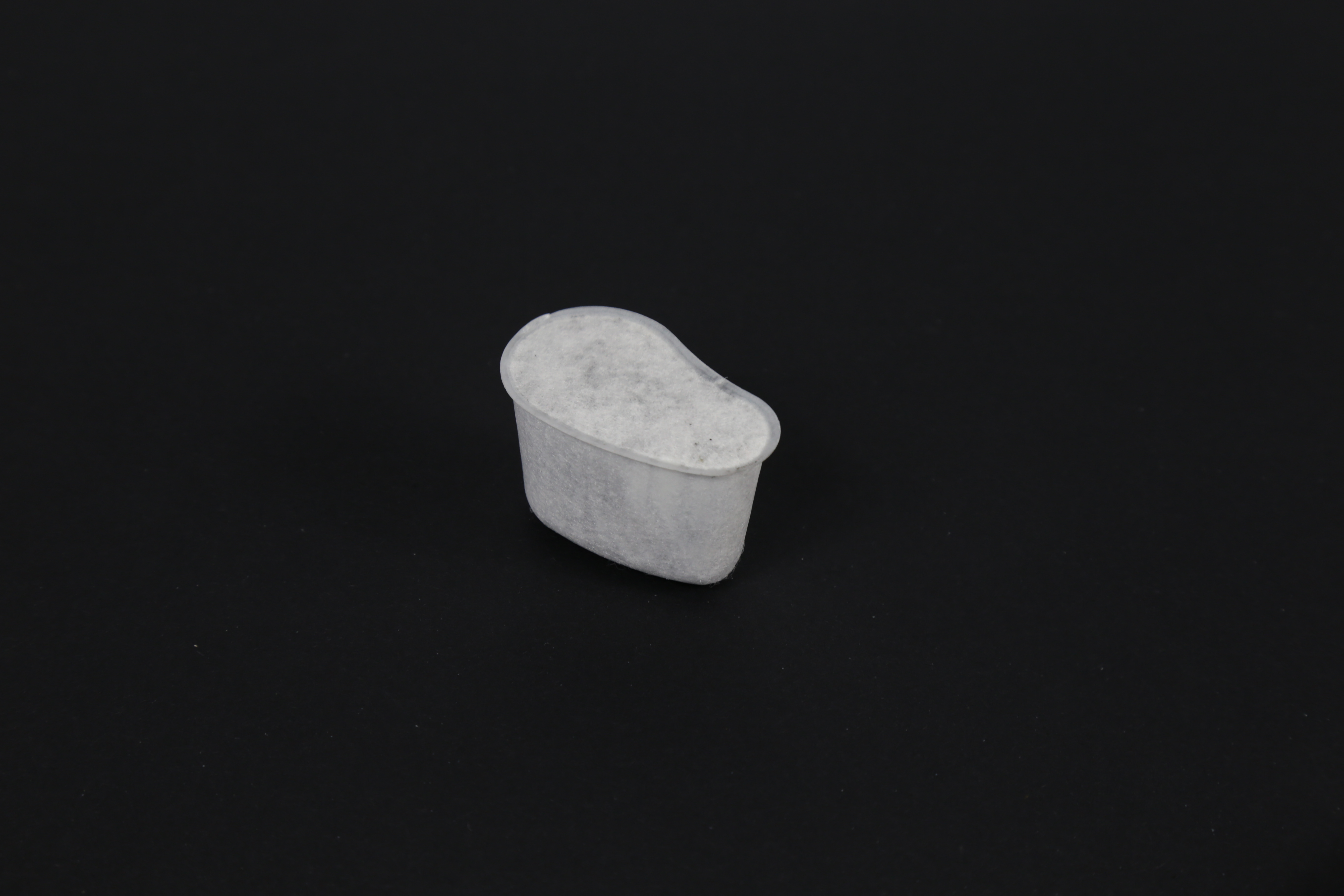
A Zanxis coffee machine filter cartridge compatible with KRUPS is a drop-in water purifying cartridge that combines coconut-shell activated carbon with food-grade ion exchange resin. It reduces sediment, rust and other large particles while addressing chlorine, hardness minerals and odours that affect coffee taste and scale build-up in the boiler. It is made for owners and buyers of automatic, semi-automatic and commercial coffee machines, and for OEM programmes that need a water filter cartridge built to their own specification.
| Item | Detail |
|---|---|
| Filtration media | High-quality coconut-shell activated carbon plus food-grade ion exchange resin |
| Micron rating | Fine micro-porous interception; retains sand, rust and other large particles |
| Effective service life | Approximately 250 litres or 2–3 months, depending on local water quality and usage frequency |
| Operating pressure | 20–120 psi (approximately 1.4–8.3 bar) |
| Operating temperature | 2 °C to 38 °C (cold water filtration only) |
| Applications | Fully automatic coffee machines, semi-automatic espresso machines, commercial coffee machine water softening, OEM water filter cartridge production |
| Quality and certification systems | Produced under ISO 9001/14001, IATF 16949, medical supplies GMP standard, with CNAS national-level testing certification |
Before a programme is approved, a QA engineer should agree which values define acceptance. The first is cartridge geometry: overall length, diameter and the interface that seats in the machine. The second is flow performance at the machine's pump pressure, checked across the stated 20–120 psi (approximately 1.4–8.3 bar) range, because a cartridge that restricts flow changes the taste profile and brewing time.
The third is the hardness reduction expected from the ion exchange resin, which depends on the incoming water. Send us a water analysis for the target market and we can discuss resin loading and the volume the cartridge will treat. The fourth is the rated capacity: approximately 250 litres or 2–3 months, depending on local water quality and usage frequency. Where a customer's water differs significantly from the reference, the media blend can be adjusted and the capacity re-checked.
The fifth is material compliance. All water-contact materials are specified as food-grade, and compliance documentation for REACH and RoHS can be supplied. Finally, confirm the temperature window: 2 °C to 38 °C, cold water filtration only. Any specification agreed at this stage becomes the reference for sample validation.
The cartridge uses coconut-shell activated carbon for chlorine, odour and organic reduction, paired with food-grade ion exchange resin for hardness minerals. Fine micro-porous interception keeps sand and rust out of the machine's hydraulic path. The combination supports the two practical goals of the product: limiting scale and blockage so equipment life is extended, and delivering cleaner water so the coffee's aroma comes through.
The cartridge is intended for cold water filtration only, within 2 °C to 38 °C and 20–120 psi (approximately 1.4–8.3 bar). It suits fully automatic coffee machines, semi-automatic espresso machines and commercial machines requiring water softening. Replacement is planned at approximately 250 litres or every 2–3 months, whichever comes first under local water quality and usage frequency. For OEM customers, size, structure, media grade, logo and packaging can all be customised.
Our own laboratory holds CNAS (China National Accreditation Service for Conformity Assessment) accreditation and can issue test reports covering filtration efficiency, dust holding capacity and resistance. For this cartridge, the same laboratory capability supports flow, pressure drop, TDS, chlorine removal and particulate testing, so the values in a quotation can be traced to measured results rather than catalogue claims.
Quality control runs as a documented sequence: incoming material inspection (IQC), in-process patrol inspection (IPQC) and outgoing inspection (OQC), with batch records kept for traceability. Production follows ISO 9001, ISO 14001 and ISO 45001 systems; IATF 16949 was achieved in 2024, and manufacturing also follows medical supplies GMP standard. Products meet REACH and RoHS requirements, and compliance documents can be provided.
The plant in Zhongshan, Guangdong, China covers 50,000 m², including six clean rooms totalling 20,000 m², supported by multiple automated production lines with monthly capacity in the millions of pieces. More than 20 years of filtration development and export experience to Europe, the United States, Japan and Korea sit behind a portfolio of over 1,000 filtration solutions.
To quote accurately and prepare samples, tell us the coffee machine or vehicle model you are targeting, the cartridge size or a drawing, the airflow or water flow requirement, the operating conditions (pressure, temperature and water analysis) and the quantity you expect per order and per year. With those inputs we can confirm the build, the MOQ and the lead time, and return a sample plan with the relevant CNAS-accredited test reports. Start the conversation through our contact page.
Yes. Our own laboratory holds CNAS accreditation and can issue reports covering filtration efficiency, dust holding capacity and resistance, and for this cartridge we test flow, pressure drop, TDS, chlorine removal and particulate interception. Reports are tied to the sample or batch you are evaluating, so you can compare measured values with the agreed specification.
Confirm cartridge geometry against the machine interface, flow at your pump pressure across the stated 20–120 psi (approximately 1.4–8.3 bar), hardness reduction for your incoming water, and the rated capacity of approximately 250 litres or 2–3 months. Also confirm the operating temperature of 2 °C to 38 °C, cold water only, and the food-grade material and REACH/RoHS documentation.
Timing depends on how much customisation is required and on your in-machine trial period. Standard compatible builds move quickly because the structure and media are already established, while OEM changes to size, media grade, logo or packaging add development steps. Share your model, drawing and water data and we will set out a sample schedule with the test points included.
The cartridge is designed to the dimensions and structure of mainstream KRUPS coffee machine models so it can replace the original cartridge directly. During development we analyse the original part and check flow, pressure and sealing so the replacement does not affect machine performance. For a specific model, we recommend confirming fit with a sample before release.
Yes. Media blend, cartridge structure and dimensions can be adjusted for the target market's water, and housing colour, logo and packaging can be customised for OEM programmes. Send a water analysis with your requirement so the resin loading and expected capacity can be discussed and then verified by sample testing.
The standard compatible version has an MOQ of 5,000 pieces, with stock or small-batch orders typically delivered in 15–20 days. OEM customised versions are recommended at 10,000 pieces or more, with mass production about 25–30 days including tooling and packaging development. Final figures are confirmed against your specification.
Plan replacement at approximately 250 litres or every 2–3 months, whichever comes first, depending on local water quality and usage frequency. Harder water or heavier machine use shortens the interval. If you need a longer service interval, discuss the media blend with us and validate the revised capacity by sample test.
Send the coffee machine or vehicle model, the cartridge size or a drawing, the water flow or airflow requirement, the operating conditions and your expected quantity. We will respond with the suitable build, MOQ, lead time and a sample and test-report plan. Use our <a href="/en/contact">contact page</a> to begin.