
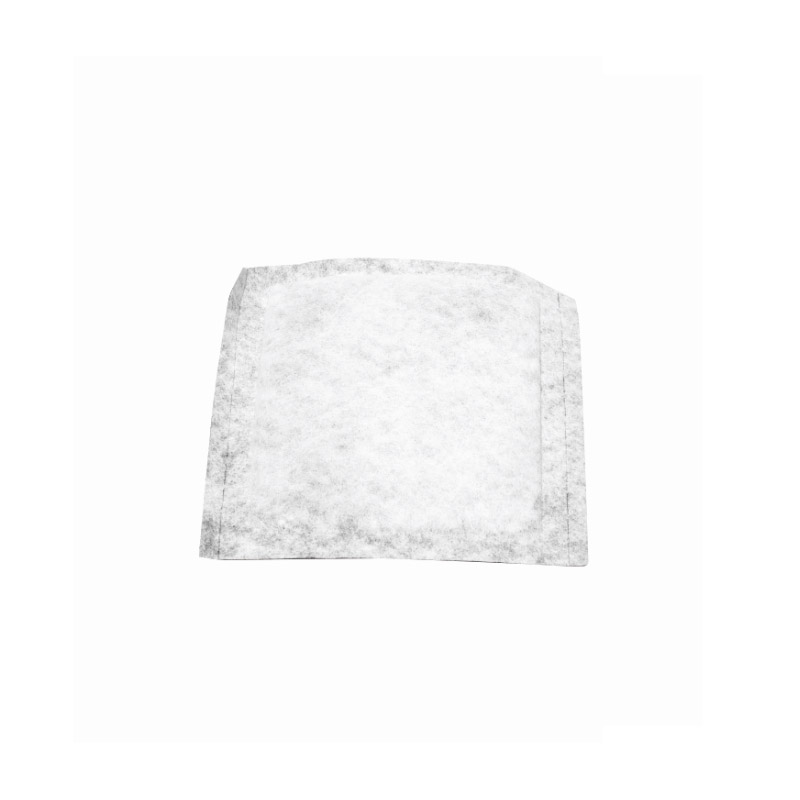
The Zanxis pet toilet filter cartridge is an activated-carbon odour filter for smart litter boxes, automatic pet toilets, pet air cabins and pet deodoriser units. Its coconut shell activated carbon layer targets ammonia, hydrogen sulfide and other volatile odours from pet waste. It is made for appliance brands, pet-product distributors and OEM/ODM buyers who need a filter matched to their own device cavity. Zanxis supplies it in custom sizes and shapes, with CNAS-accredited lab reports and sample sign-off before mass production.
| Item | Detail |
|---|---|
| Product name | Pet toilet filter cartridge / pet odour-control activated carbon filter |
| Core material | High iodine value coconut shell activated carbon with environmentally friendly PET material |
| Core function | Strong adsorption of odours; removal of ammonia, TVOC and other volatile odours released by pet waste |
| Application | Built-in filter for smart cat litter boxes, automatic pet toilets, pet air cabins, pet deodorisers and similar equipment |
| Size | Customised on request; cutting, edge sealing and special shapes can follow the customer's mould and device cavity |
| Suggested replacement interval | 1–3 months, depending on the number of pets and how often the device runs |
| Production standards | ISO 9001 and ISO 14001, IATF 16949, BSCI, environmentally friendly and non-toxic directives; export-grade quality for Europe and the US |
Before a filter is released for production, Zanxis asks buyers to agree the measurable values in writing. The first is odour-removal performance against the gases that matter in a litter box — ammonia and hydrogen sulfide — measured on the coconut shell carbon grade selected for the project. The second is pressure drop at the device's actual airflow, because a carbon layer thick enough to hold odours can also load the fan. The third is carbon iodine value and fill weight, which set the adsorption capacity behind the replacement interval.
Also confirm the mechanical values: cut tolerance against your cavity drawing, edge-seal integrity so loose carbon cannot migrate, and dust release from the finished cartridge. Finally, fix the replacement interval you will state to end users; Zanxis lists 1–3 months as a guide, and the figure your market sees should reflect pet numbers and device run frequency. Once these values are written down, sample testing and production inspection are judged against the same numbers.
The cartridge combines high iodine value coconut shell activated carbon with environmentally friendly PET material. The carbon is the working layer: its porous structure adsorbs the ammonia, hydrogen sulfide and TVOC molecules that give litter boxes their smell, while the PET structure gives the filter its shape and keeps it stable inside the device. Because the format is cut and edge-sealed to the customer's mould and cavity, the same carbon grade can be supplied in different footprints for different litter box models.
The filter is designed as a built-in consumable. It fits inside smart cat litter boxes, automatic pet toilets, pet air cabins and pet deodorisers, where it treats air pulled through the device rather than the litter surface directly. For end users, the practical instruction is simple: replace the cartridge every 1–3 months, sooner in multi-pet homes or where the device runs continuously. For buyers, the same statement is a specification decision — carbon fill weight and format can be adjusted so the interval you publish matches the market you sell into.
Zanxis operates its own laboratory, accredited by CNAS (China National Accreditation Service for Conformity Assessment), which can issue test reports covering filtration efficiency, dust holding capacity and resistance. For this cartridge, that means odour-removal and airflow-resistance data can be documented rather than asserted, and reports can travel with samples and bulk shipments.
Production sits in a 50,000 m² plant in Zhongshan, Guangdong, China, including 6 clean workshops with a combined area of 20,000 m². Quality control runs through IQC, IPQC and OQC, with retained samples archived per batch. The company holds ISO 9001, ISO 14001 and ISO 45001 system certifications and gained IATF 16949 automotive quality management certification in 2024; products meet REACH and RoHS environmental requirements, and compliance documents can be supplied. With more than 20 years of filtration development and manufacturing experience and over 1,000 filtration solutions developed, Zanxis has exported to Europe, the US, Japan and Korea for more than 20 years, and supports OEM/ODM customisation of size, structure, filter media grade, frame material, logo and packaging.
To quote accurately, Zanxis needs six inputs: your device or vehicle model, the size or a drawing of the filter cavity, the airflow the device moves, the operating conditions (pet numbers, humidity, run frequency), the target quantity, and any packaging or logo requirements. Send these through the contact page and the reply will include the proposed specification, sample plan, MOQ, lead time and the applicable CNAS test report. Standard samples are usually free of charge with international courier costs paid by the customer; custom samples carry a proofing fee that can be deducted from the bulk order.
Yes. Zanxis operates a CNAS-accredited laboratory that can issue reports covering filtration efficiency, dust holding capacity and resistance. For this cartridge, odour-removal performance and airflow resistance can be documented alongside a material specification sheet. Reports can be sent with samples and with bulk shipments.
Standard samples are usually dispatched within 3–7 working days; custom samples depend on the tooling and print work agreed for your cavity. Allow additional time for your own in-device testing against the agreed values. Once the sample is signed off, it becomes the production reference for IQC, IPQC and OQC.
Yes. Zanxis cuts, edge-seals and shapes the filter to the customer's mould and device cavity, and can adjust carbon grade, fill weight, logo and packaging under OEM/ODM. More than 1,000 filtration solutions have been developed across the company's product range. Send a drawing or cavity size to start the specification.
Standard specifications typically start at 5,000 pieces; custom versions depend on tooling difficulty and packaging, generally from 10,000 pieces. Standard items ship in about 25–30 days after order and payment confirmation, and customised items in about 35–45 days. Confirm both figures against your project when requesting a quote.
Zanxis lists a suggested replacement interval of 1–3 months, depending on the number of pets and how often the device runs. Multi-pet homes and continuously running devices sit at the shorter end. Carbon fill weight and format can be adjusted so the interval you publish matches your market.
Confirm odour-removal performance for ammonia and hydrogen sulfide, pressure drop at your device's airflow, carbon iodine value and fill weight, cut tolerance, edge-seal integrity and dust release. Fixing these in writing means sample testing and batch inspection are judged against the same numbers. Zanxis converts them into a written filter specification.
Products meet REACH and RoHS environmental requirements, and compliance documents can be supplied. Production follows ISO 9001 and ISO 14001, IATF 16949, BSCI and environmentally friendly, non-toxic directives. Zanxis has exported to Europe, the US, Japan and Korea for more than 20 years.
Send your device or vehicle model, filter size or drawing, airflow, operating conditions, quantity and any packaging requirements through the contact page. You will receive a proposed specification, sample plan, MOQ, lead time and applicable test report. Sharing a drawing early shortens the sample stage.