
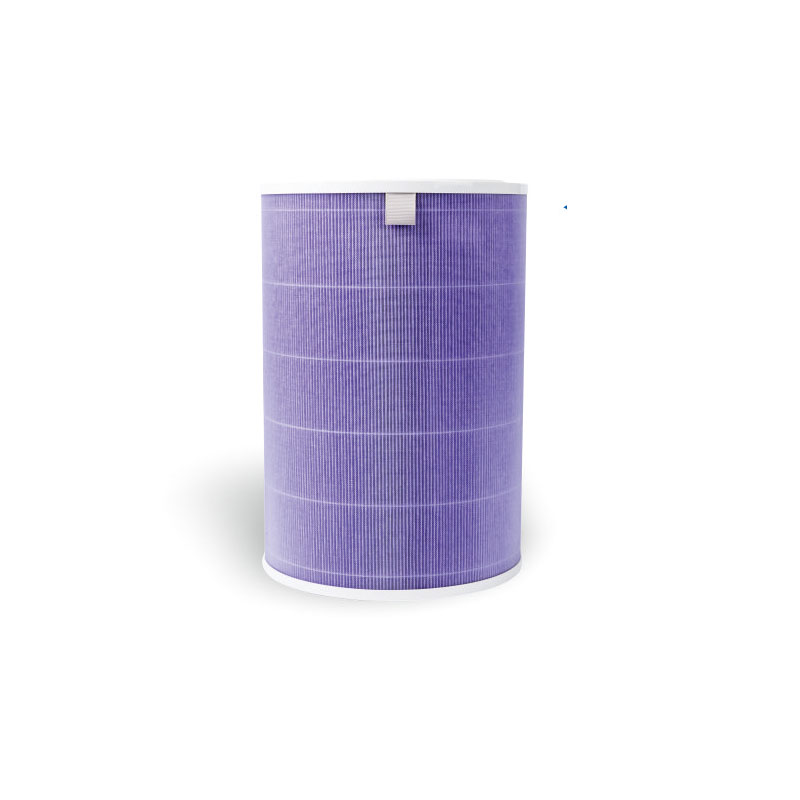
The Zanxis cylindrical anti-bacterial and anti-virus filter is a multilayer composite HEPA filter built in a 360° ring-shaped, high-density pleated format that draws air from all sides of the cylinder. It captures PM2.5, pollen, pet dander, cigarette particles and dust aerosols, and its anti-bacterial/anti-virus function is designed to inhibit influenza A virus, E. coli and Staphylococcus aureus. It is made for high-end car air purifiers, household and desktop compact air purifiers, and mother-and-baby health appliances, and it is produced by Zanxis in Zhongshan, Guangdong, China. This page is written for engineers and buyers who sign off on parameters: which values to confirm, how samples and lab reports verify them, and what to check before a production order.
| Item | Detail |
|---|---|
| Product name | Cylindrical HEPA + anti-bacterial/anti-virus composite filter (Cylindrical Anti-bacterial HEPA Filter) |
| Filter construction and form | Multilayer functional composite filter media; 360° ring-shaped, high-density pleated air-intake structure |
| Core HEPA performance | Strong filtration of PM2.5, pollen, pet dander, cigarette particles and dust aerosols |
| Anti-bacterial / anti-virus function | Effectively inhibits influenza A virus, E. coli and Staphylococcus aureus |
| Mite-removal performance (test standard) | Mite removal rate up to 82.4% (with reference to the FZ/T01100-2008 standard, tested by a national authoritative institution) |
| Main end applications | High-end car air purifiers; household/desktop compact air purifiers; mother-and-baby health appliances |
| Size and specification customisation | Full OEM/ODM customisation supported; tooling and contract production for different outer diameters, inner diameters, heights and filtration-efficiency configurations |
| Quality certification systems | Produced with 20,000 m² of clean workshops; IATF 16949 automotive quality management system and ISO 9001/14001 certified, supporting automotive-grade product consistency |
Before a sample is built, confirm the dimensional envelope: outer diameter, inner diameter and height, plus the pleat count that suits the available pressure budget. These three dimensions determine fit in a car purifier or a desktop unit, and they are the first values we lock in a drawing review.
Confirm the filtration-efficiency configuration next. The product is a multilayer composite HEPA structure, and the efficiency mix can be specified per project; state the target capture level for PM2.5 and the aerosol challenge you care about so the media combination can be matched to it.
For the anti-bacterial and anti-virus claim, confirm which organisms are in scope. The stated function covers inhibition of influenza A virus, E. coli and Staphylococcus aureus, and any project-specific organism list should be agreed in writing before sampling.
The mite-removal figure is 82.4%, tested with reference to FZ/T01100-2008 by a national authoritative institution. Confirm whether that figure and its report are the ones you need for your market documentation.
Finally, confirm the operating conditions: rated airflow, expected pressure drop, duty cycle (for example, daily running hours) and the replacement interval you plan to publish. These inputs let us propose a media grade and pleat geometry that hold performance across the service life rather than only at the first test.
The filter is a multilayer functional composite built into a 360° ring-shaped, high-density pleated structure. Air enters around the full circumference, which is intended to maximise the purifier's clean air delivery rate within a compact housing; this is why the format suits cylindrical car purifiers and desktop units where the intake area is limited.
The core HEPA layer is specified for PM2.5, pollen, pet dander, cigarette particles and dust aerosols. The anti-bacterial and anti-virus function is a separate functional layer in the composite, intended to inhibit influenza A virus, E. coli and Staphylococcus aureus at the filter. The two functions are specified and verified as part of the same composite construction.
Typical end uses are high-end car air purifiers, household and desktop compact air purifiers, and mother-and-baby health appliances. Because outer diameter, inner diameter, height and efficiency mix are all open to OEM/ODM customisation, the same construction can be tooled for different device platforms rather than forcing a device to accept one stock size.
For service planning, treat the replacement interval as an operating-condition decision: daily running hours, inlet dust load and the pressure-drop limit of the purifier's fan all shorten or extend life. Agree the interval with us during sampling so the published figure matches the duty cycle you actually specify.
Verification starts with our own laboratory, which is accredited by CNAS (China National Accreditation Service for Conformity Assessment) and can issue test reports for filtration efficiency, dust holding capacity and resistance. Those reports are the documents we attach to sample sign-off, so the values on this page can be checked rather than taken on trust.
Production runs under IQC, IPQC and OQC controls across the process: incoming material inspection, in-process inspection and outgoing inspection. The plant covers 50,000 m², including 6 clean workshops totalling 20,000 m², and the filter is produced within that clean-workshop footprint.
Zanxis holds IATF 16949 automotive quality management system certification, obtained in 2024, together with ISO 9001, ISO 14001 and ISO 45001 system certification. Products meet REACH and RoHS environmental requirements, and compliance documents can be provided. With more than 20 years of filtration R&D and manufacturing experience and more than 20 years of continuous export to Europe, the United States, Japan and South Korea, we support OEM/ODM customisation of dimensions, structure, media grade, frame material, logo and packaging, with more than 1,000 filtration solutions developed to date. Multiple automated production lines support monthly capacity in the millions of pieces. The company is located in Zhongshan, Guangdong, China.
To start a sample and report request, send us: the device or vehicle model the filter fits, the size or a drawing (outer diameter, inner diameter, height), the airflow or rated air volume, the operating conditions (duty cycle, inlet dust load, pressure-drop limit), and the quantity you are planning. With those inputs we can return a proposed specification, a sample plan and the matching CNAS laboratory report for review. Use the contact page to send your requirement and we will respond with the verification steps for your project.
Yes. Our laboratory is accredited by CNAS and can issue reports for filtration efficiency, dust holding capacity and resistance. The mite-removal figure of 82.4% was tested with reference to FZ/T01100-2008 by a national authoritative institution. Reports are supplied with the sample so you can review performance and dimensions together.
Confirm the outer diameter, inner diameter and height, the filtration-efficiency configuration, and the organism list for the anti-bacterial and anti-virus function. Also state the rated airflow, expected pressure drop and duty cycle. These inputs determine the media grade and pleat geometry we propose.
Timing depends on whether the size is standard or custom and on which tests are in scope. Send the drawing and operating conditions through the contact page and we will confirm the sample plan and the report scope for your project before work begins.
Full OEM/ODM customisation is supported for outer diameter, inner diameter, height and efficiency configuration, plus logo and packaging. Minimum order quantity depends on the specification and is agreed per project; confirm it together with the sample request so volume and tooling are planned together.
Lead time is set per order once the signed-off specification, quantity and packaging are fixed. Because the specification is locked at sample sign-off, production scheduling can be confirmed at that point; ask for the schedule with your quantity in the inquiry.
There is no single interval for every device. Replacement depends on daily running hours, inlet dust load and the pressure-drop limit of the purifier's fan. Agree the interval with us during sampling so the figure you publish matches your duty cycle.
The anti-bacterial and anti-virus function is designed to effectively inhibit influenza A virus, E. coli and Staphylococcus aureus. Confirm any additional organisms required for your market in writing before sampling, so the composite specification and test scope match your claim.
Send the device or vehicle model, the size or a drawing, the airflow or rated air volume, the operating conditions and the quantity through our <a href="/en/contact">contact page</a>. We will reply with a proposed specification and the sample and report steps for your project.