
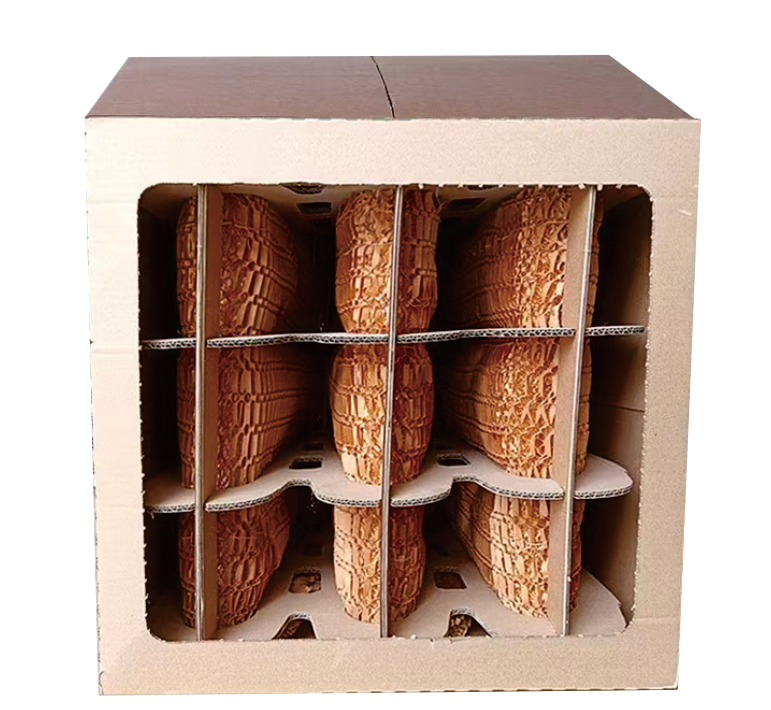
The Zanxis paint mist filter is a dry labyrinth-style honeycomb filter box that captures overspray paint mist in spray booths and coating lines before it reaches downstream equipment. It holds 12–18 kg of paint per box, traps 95%+ of mist, and runs with no wastewater, so it suits automotive refinish booths, furniture spray rooms, machinery and hardware coating shops, and other dry-process paint operations. This page sets out the values a QA engineer would want confirmed, how samples and lab reports verify them, and how to specify the product.
| Item | Detail |
|---|---|
| Product type | Labyrinth-style honeycomb filter box (dry paint mist filter) |
| Paint mist capture rate | 95%+; efficiency rises further as the internal channels narrow with captured paint |
| Paint holding capacity | 12–18 kg per box |
| Airflow resistance | Rises slowly with loading; exhaust volume stays stable |
| Construction | Flame-retardant kraft paper honeycomb |
| Wastewater | None — dry process; spent boxes are packed and handled as compliant solid waste |
| Typical role | First-stage pre-filter ahead of VOCs treatment; often followed by medium-efficiency filter media plus an activated carbon box |
| Applications | Automotive refinish booths, furniture spray rooms, machinery coating shops; well suited to high-viscosity mist from waterborne paints and clear coats |
| Customisation | OEM/ODM modular sizes to match the exhaust section structure of the booth |
| Origin | Zhongshan, Guangdong, China |
Every number in the table is a specification to be checked against your own booth, not a promise that applies unchanged to every line. Confirm these values before you commit to a purchase order.
Capture rate. The 95%+ figure describes how much paint mist the honeycomb captures under defined conditions. Ask which paint type (waterborne, solvent-borne, clear coat) and which airflow velocity the figure refers to, and compare it with your booth's exhaust rate.
Paint holding capacity. The 12–18 kg range per box depends on paint solids and viscosity. Use it to calculate how often you will change boxes and how many spare units to keep on hand.
Resistance behaviour over life. The useful characteristic here is that resistance rises slowly rather than spiking, which keeps exhaust volume steady. Confirm the initial resistance and how far it may rise before you treat the box as spent — typically when resistance reaches 2–2.5 times the initial value.
Fire performance of the kraft paper. The honeycomb is made of flame-retardant kraft paper. Ask for the combustion grade relevant to your insurance and site requirements.
Waste handling. A dry process produces no wastewater, but spent boxes are still solid waste. Confirm how your local contractor classifies them before you switch from a wet booth.
We recommend a sample sign-off before the first bulk order. The sequence below is the one we follow with spray booth operators.
The filter is built as a honeycomb of flame-retardant kraft paper. Paint-laden air is forced through narrowing channels; mist particles collide with the paper walls and stay there, and the channels become narrower as paint accumulates, which is why capture efficiency tends to rise over the service life rather than fall. The labyrinth structure spreads the captured paint through the depth of the box instead of letting a skin form on the surface — the surface-crusting failure mode common to conventional glass-fibre or non-woven paint stop media, where resistance climbs quickly and exhaust volume drops.
The high holding capacity of 12–18 kg per box means fewer change-outs and less downtime. Because the process is dry, there is no wastewater, no water bill and no discharge fee; spent boxes are packed and handled as compliant solid waste, with none of the fibre shedding risk associated with some media and none of the odour or bacterial growth that can occur in wet curtain booths.
The filter is normally used as the first-stage pre-filter ahead of VOCs treatment. A common arrangement places the paint mist box first, medium-efficiency filter media second and an activated carbon box last, so that both paint mist and odour are addressed before discharge. It is particularly suited to high-viscosity overspray from waterborne paints and clear coats in automotive refinish booths, furniture spray rooms and machinery coating shops.
Our own laboratory holds CNAS (China National Accreditation Service for Conformity Assessment) accreditation and can issue test reports covering filtration efficiency, dust holding capacity and resistance. That is where the performance figures on this page can be documented for your file.
Quality control runs through the whole order: IQC on incoming materials, IPQC during production and OQC before shipment. The plant holds ISO 9001, ISO 14001 and ISO 45001 system certification, and was awarded IATF 16949 automotive quality management system certification in 2024. Products meet the REACH and RoHS environmental requirements, and compliance documents can be supplied.
Manufacturing takes place in Zhongshan, Guangdong, China, in a 50,000 m² plant that includes six clean workshops totalling 20,000 m². Multiple automated production lines support output of up to several million pieces per month. With more than 20 years of filter development and manufacturing experience and over 20 years of continuous export to Europe, the United States, Japan and South Korea, we have developed more than 1,000 filter solutions and support OEM/ODM customisation of size, structure, filter media grade, frame material, logo and packaging.
To quote accurately and prepare the right verification set, tell us the following:
Send these details through the contact page and our engineers will respond with a proposed configuration, sample arrangement and the test reports relevant to your specification.
Yes. Our CNAS-accredited laboratory can issue reports covering filtration efficiency, dust holding capacity and resistance, which document the 95%+ capture rate and the 12–18 kg paint holding capacity under defined test conditions. Tell us which values you need documented and we will match the report to your specification.
We supply standard samples for trial use on your line, and the trial itself usually runs long enough to log resistance at start, mid-life and end of life under your actual paint load. The timeline depends on your booth schedule and the values you choose to verify, so agree the test set with us first and we will plan the sample dispatch around it.
Confirm all three against your own booth. The 95%+ capture rate should be checked for your paint type and airflow velocity, initial resistance and its permitted rise should be set for your exhaust fan, and the 12–18 kg per box capacity should be used to calculate change-out intervals. Combustion grade and waste classification are also worth checking with your site and contractor.
Yes. We support OEM/ODM customisation of size and modular structure to match the exhaust section of your spray booth, along with filter media grade, frame material, logo and packaging. Send the booth drawing and airflow data and we will propose a modular size.
Please confirm MOQ and lead time with our team for your specific configuration, since both depend on whether you order a standard or customised box and on current production scheduling. Share your trial and bulk quantities in the inquiry and we will state both figures in the quotation.
Replace it when resistance reaches roughly 2–2.5 times the initial value, or when visual inspection shows the medium is saturated and paint is penetrating. Because the honeycomb holds 12–18 kg per box and resistance rises slowly, change-out intervals are long compared with surface-crusting media, but the exact interval depends on your paint volume.
Correct — the process is dry, so there is no water bill, no discharge fee and no wastewater to treat. Spent boxes are packed and handled as compliant solid waste, and you should confirm the local waste classification with your contractor before switching from a wet booth.
Send your device or booth model, size or drawing, airflow or water flow, operating conditions and quantity through our contact page. Our engineers will reply with a proposed configuration, the sample arrangement and the relevant test reports.