
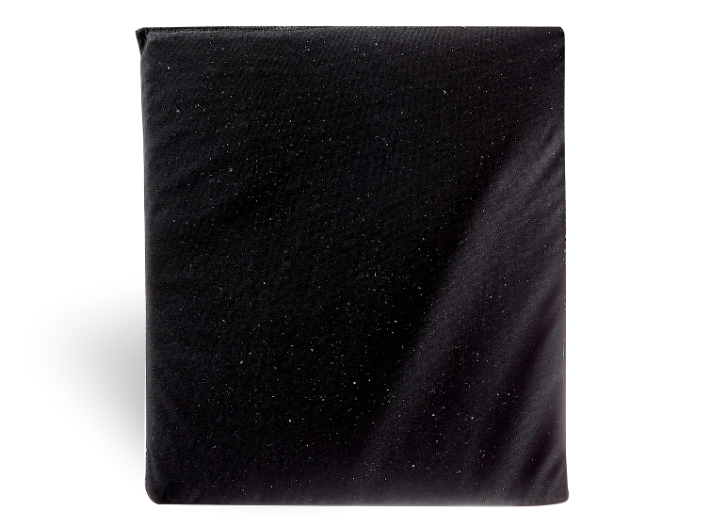
This washable activated carbon odor filter is a polyurethane sponge filter with adhesive-bonded activated carbon, designed to remove odors and gases such as formaldehyde, benzene, and ammonia while also providing initial filtration for larger particles like hair and dust. It is used in range hoods, integrated stoves, air purifiers, and other ventilation systems. Zanxis manufactures this filter with flexible customization options to meet specific OEM requirements.
| Item | Detail |
|---|---|
| Product Name | Washable Activated Carbon Filter (Sponge Type) / Washable Activated Carbon Sponge Filter |
| Core Substrate | Polyurethane foam sponge |
| Adsorption Material | High-quality powdered or fine granular activated carbon, fixed through a special curing process |
| Filtration Performance | Initial filtration of large particles (hair, dust) + strong adsorption of harmful gases such as formaldehyde (HCHO), benzene, and ammonia |
| Physical Structure | Washable and reusable, very low air resistance, flexible and easy to cut, good air permeability |
| Main Applications | Air purifier pre-filter, fresh air system pre-filter, car air conditioning filter, central air conditioning return air inlet, industrial vacuum cleaner |
| Customization | Full OEM/ODM flexibility: thickness from 3 mm to 50 mm, various pore densities (PPI), and die-cut shapes and sizes |
| Quality Certification | Produced in 20,000 m² clean workshops; company certified to ISO 9001, ISO 14001, and IATF 16949 |
Before selecting this filter, several parameters should be confirmed to ensure it meets your application requirements. First, verify the thickness and pore density (PPI) that match your airflow and pressure drop targets. Second, confirm the activated carbon type and loading, as these affect adsorption capacity for specific gases. Third, check the dimensional tolerances and die-cut shape to ensure proper fit in your device. Finally, review the washability and durability requirements, including the number of wash cycles expected. Zanxis can provide samples and test reports to help you validate these parameters.
The filter is constructed from polyurethane foam sponge as the substrate, with activated carbon particles adhered to the foam structure using a special curing process. This design allows for high flexibility, enabling the filter to be cut into various shapes to fit different devices. The open-cell foam structure provides low air resistance and good permeability, making it suitable for both pre-filtration and odor removal. The filter is washable and reusable, which reduces replacement frequency and long-term costs. It is commonly used in range hoods and integrated stoves to capture cooking odors and grease particles, as well as in air purifiers, fresh air systems, and automotive cabin filters.
Zanxis operates a CNAS-accredited laboratory that can issue test reports for filtration efficiency, dust holding capacity, and resistance. Our quality management system includes IQC, IPQC, and OQC procedures to monitor incoming materials, in-process production, and final products. We are certified to IATF 16949 (achieved in 2024), ISO 9001, ISO 14001, and ISO 45001, and our products comply with REACH and RoHS regulations. With over 20 years of experience in filter manufacturing, we produce in a 50,000 m² plant, including 20,000 m² of clean workshops, and have developed more than 1,000 filtration solutions. Our location is in Zhongshan, Guangdong, China.
To request samples, test reports, or a quotation, please contact us with the following information: your device or vehicle model, required dimensions or a drawing, airflow or water flow specifications, operating conditions, and estimated quantity. Our team will respond with precise details to support your project. Contact Zanxis today to discuss your filtration needs.
Yes, Zanxis can provide test reports from our CNAS-accredited laboratory, covering filtration efficiency, dust holding capacity, and resistance. These reports help verify performance for your application. Please contact us with your specific requirements to request the relevant reports.
Sample validation time depends on whether the sample is standard or customised. Standard samples are typically dispatched within 1-3 working days, while custom samples may take 7-15 working days for production. After you receive the samples, validation time depends on your testing process. We recommend allowing sufficient time to evaluate fit, airflow, and odor removal performance in your device.
For standard specifications, the MOQ is usually 1,000-2,000 pieces. Customised products may require an MOQ of 3,000-5,000 pieces, depending on tooling requirements. Lead time for standard stock items is 3-7 days; for OEM orders, it is typically 25-35 days after sample approval and order confirmation. These can be negotiated based on your project needs.
The filter is washable and reusable, so replacement frequency depends on usage and maintenance. Under normal household use, with regular washing (e.g., every 1-2 months), the filter can last 12-18 months. However, actual lifespan varies with air quality and usage intensity. We recommend monitoring filter condition and replacing when cleaning no longer restores performance.
Yes, Zanxis offers full OEM/ODM customisation. We can produce filters in various thicknesses from 3 mm to 50 mm, different pore densities (PPI), and die-cut shapes to match your device. Simply provide a drawing or sample, and we will develop a solution that fits your requirements.
This filter provides initial filtration for large particles and adsorbs harmful gases such as formaldehyde, benzene, and ammonia. Specific efficiency values depend on the activated carbon type and loading, as well as test conditions. Our CNAS laboratory can provide test reports for the relevant parameters to verify performance for your application.
We implement IQC, IPQC, and OQC procedures throughout production. Incoming materials are inspected, in-process checks monitor critical parameters, and final products are sampled according to quality standards. Our ISO 9001 and IATF 16949 certified systems support consistent quality. Each batch is traceable to ensure reliability.